Last Updated on 03/09/2026 by KLB Editorial Team

Working remotely can offer greater flexibility, eliminate the daily commute, and open up opportunities with employers outside your local area. But finding a genuine remote position isn’t always easy.
Remote jobs can attract a large number of applicants, and job seekers also need to be careful about scams, misleading listings, and positions that aren’t actually available in their country.
The good news is that there are established remote job platforms that can make the search easier.
We’ve selected three remote job sites that offer different approaches to finding remote work, including curated listings, screened opportunities, international roles, and tools designed to help you search more efficiently.
What to Look for in a Remote Job Site
Before choosing a remote job platform, consider what matters most to you.
A useful remote job site should make it easier to:
- Find genuine remote opportunities
- Filter jobs by location, industry, experience level, or salary
- Identify positions that are actually open to applicants in your country
- Set up job alerts
- Discover new jobs before they become overwhelmed with applications
- Avoid obvious scams and misleading opportunities
- Apply directly or easily find the employer’s application process
Remember that “remote” doesn’t always mean “work from anywhere.”
Some employers restrict remote positions to particular countries, regions, or time zones. Others may require you to have the legal right to work in the country where the company is based.
Always check the location requirements before spending time preparing an application.
3 Best Remote Job Sites
1. Remotive: Remote Jobs for International & Startup Careers

Remotive is a remote-focused job platform with opportunities across areas such as customer support, marketing, operations, design, technology, sales, finance, and other professional fields.
It can be particularly useful if you’re looking for remote-first companies, startup opportunities, or roles that may be open to international candidates.
Remotive also provides job alerts and search filters, making it easier to narrow your search instead of manually checking hundreds of listings.
Key Features
- Remote-focused job listings
- International and worldwide opportunities
- Jobs across multiple industries
- Search and filtering tools
- Custom job alerts
- Remote-work resources
Best for
- Professionals looking for remote-first companies
- Startup and technology candidates
- South Africans looking for international remote opportunities
- Candidates who want job alerts instead of constantly checking job boards
Things to Consider
- Some features require a paid membership
- International eligibility varies by individual job
- Popular remote positions can attract a large number of applicants
Tip: Don’t wait too long to apply when you find a suitable remote position. Set up relevant alerts so you can discover new opportunities quickly.
2. FlexJobs: Screened Remote & Flexible Jobs

FlexJobs is a long-established job platform specialising in remote, hybrid, flexible, and work-from-home opportunities.
One of its main selling points is that job listings are hand-screened before being included, which is particularly appealing to job seekers who are concerned about scams, misleading opportunities, and low-quality listings.
FlexJobs covers a wide range of industries and also provides career resources to help candidates with their job search.
Key Features
- Hand-screened job listings
- Remote, hybrid, and flexible positions
- Jobs across many industries
- Search and filtering tools
- Career resources
- Job search guidance
Best for
- Candidates who want to reduce the amount of time spent filtering questionable listings
- Professionals looking for remote or flexible work
- Career changers
- Job seekers who prefer a curated job board
Things to Consider
FlexJobs requires a paid subscription to access its full job database. It currently offers several subscription options, including a short trial period and longer-term plans.
Consider the cost against how actively you’re searching and how much value you place on having a curated database of remote and flexible opportunities.
Tip: If you’re actively job hunting, use the filters to narrow positions by your experience, industry, location, and preferred work arrangement rather than browsing everything.
3. Remote Rocketship: Discover Remote Jobs Beyond the Major Job Boards
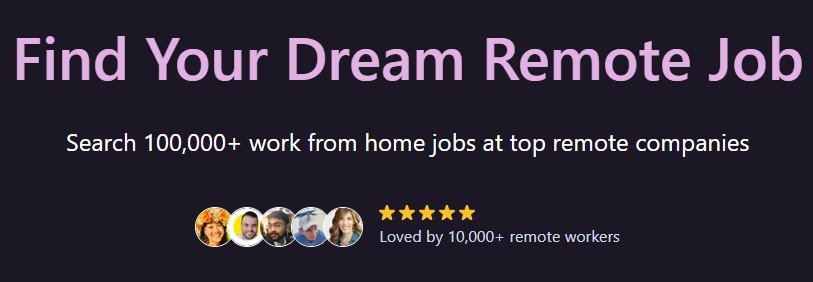
Remote Rocketship takes a different approach from a traditional job board.
Rather than relying solely on employers paying to post jobs, the platform searches company career sites and other sources to identify remote opportunities. This can help job seekers discover positions that may not appear on the largest mainstream job boards.
Remote Rocketship also provides filters for location, experience, salary, job type, and other criteria.
The platform has a dedicated section for remote jobs in South Africa, making it particularly relevant to South African candidates looking for work-from-home opportunities.
Key Features
- Large database of remote jobs
- Jobs sourced from company career sites and other online sources
- Location and salary filters
- Email alerts
- Remote jobs by country
- Tools for identifying potentially outdated or “ghost” job listings
- Jobs that may not appear on LinkedIn
Best for
- Job seekers who want to search beyond the major job boards
- Candidates looking for international remote opportunities
- South Africans searching specifically for remote jobs
- People who want detailed filters and job alerts
Things to Consider
Remote Rocketship is a paid service, so you’ll need to decide whether the additional job-search tools and broader database justify the subscription cost.
Because jobs are sourced from external company websites and other sources, you should still check the original employer’s website and confirm that a position is currently available before applying.
Tip: Use the country and salary filters to make your search more relevant, particularly if you’re looking for positions that specifically accept applicants from South Africa.
| Platform | What you’re really paying/getting |
|---|---|
| FlexJobs | Human-vetted, screened listings |
| Remotive | Curated remote jobs + international focus + alerts |
| Remote Rocketship | Huge job index + early discovery + jobs beyond major boards |
Which Remote Job Site Should You Use?
You don’t necessarily have to choose just one.
Each platform takes a slightly different approach, so using more than one can increase the number of opportunities you see.
| If you want… | Consider… |
|---|---|
| International and remote-first opportunities | Remotive |
| Screened remote and flexible job listings | FlexJobs |
| A broad search that includes jobs sourced from company websites | Remote Rocketship |
| Remote jobs specifically relevant to South Africa | Remotive or Remote Rocketship |
| Career resources alongside your job search | FlexJobs |
Don’t Limit Your Remote Job Search to Remote Job Boards
Remote-specific job sites are useful, but they shouldn’t be your only source of opportunities.
Many companies advertise remote positions on their own careers pages, while others use general job boards.
It’s worth checking:
- Company career websites
- Indeed
- Local job boards
- Recruitment agencies
- Industry-specific job boards
- Professional networks
- Remote-focused job platforms
You can also find companies that regularly hire remote employees and check their careers pages directly.
For more places to search, visit our Job Search Sites resource.
How to Find Remote Jobs That You Can Actually Apply For
One of the biggest mistakes remote job seekers make is assuming that every position marked “remote” is available worldwide.
Before applying, check:
Location requirements
Look for phrases such as:
- Remote – Worldwide
- Remote – South Africa
- Remote – Africa
- EMEA
- Americas
- US only
- UK only
- Specific countries or regions
If the listing says “remote” but doesn’t explain where the employee must be located, check the full job description or the employer’s careers page.
Time zone requirements
A company may allow international remote workers but require them to work specific hours.
For example, a South African applicant may be able to work for a UK-based employer relatively easily, while a role requiring US Pacific Time hours may involve a much less convenient schedule.
Employment and legal requirements
International remote employment can involve tax, payroll, employment-law, and work-authorisation requirements.
Don’t assume that because you can technically work from your home in South Africa, a company can legally employ you there.
Always read the employer’s requirements carefully.
How to Avoid Remote Job Scams
Remote job scams are a serious problem because scammers know that people looking for work may be willing to respond quickly to an attractive opportunity.
Be cautious if someone:
- Asks you to pay money to get a job
- Requests payment for “training” before employment
- Offers an unusually high salary for very little work
- Contacts you unexpectedly through WhatsApp or social media
- Offers you a job without a meaningful interview
- Requests sensitive personal or banking information before a legitimate hiring process
- Uses a free email address while claiming to represent a major company
- Pressures you to act immediately
- Asks you to receive or transfer money on their behalf
Check the Employer Before You Apply
If you find a remote job through a third-party website, take a few minutes to verify the employer.
Look for:
- An official company website
- A genuine company careers page
- A professional company email domain
- A LinkedIn company profile
- Consistent information about the role across different sources
When possible, apply through the employer’s official careers page.
For more advice, read our guide on How to Spot Fake Social Media Side Gigs and Job Scams.
Don’t Pay Someone to “Get You a Job”
A legitimate employer does not normally require a candidate to pay money simply to receive a job offer.
Be especially careful with social media posts promising guaranteed remote employment, recruitment fees, paid registration, or “exclusive” job opportunities.
There are legitimate paid job-search services, such as the platforms discussed in this article, where you’re paying for access to a service or database. That’s very different from paying an individual or supposed recruiter to guarantee you employment.
No legitimate job board can guarantee that you will be hired.
How to Improve Your Chances of Landing a Remote Job
Finding a remote position is only the first step. You also need to compete effectively for it.
Before applying:
Tailor your CV.
Highlight the skills and experience that match the position.
Show remote-work skills.
If you have worked remotely before, mention your experience with digital communication, collaboration tools, independent work, time management, and remote systems.
Demonstrate results.
Don’t just list responsibilities. Show what you achieved.
Prepare for video interviews.
Check your camera, microphone, internet connection, background, and lighting before the interview.
Practise your answers.
Remote employers still want to know how you communicate, solve problems, collaborate, and work independently.
For more help, visit our CV Tips & Tools and Interview Tips & Tools resources.
Is Paying for a Remote Job Site Worth It?
A paid job platform isn’t automatically better than a free one.
The value comes down to what you’re getting in return.
A paid service may be worthwhile if it helps you:
- Find opportunities more efficiently
- Reduce the amount of time spent searching
- Access a larger or more curated database
- Set up useful job alerts
- Discover opportunities you wouldn’t otherwise find
- Filter jobs more effectively
- Avoid spending hours sorting through irrelevant listings
However, you should never feel that you need to pay for a job search.
Start with free resources as well and decide whether a paid platform provides enough additional value to justify the cost.
The Bottom Line
Finding a legitimate remote job requires more than simply searching for “work from home” and applying to everything you see.
Use remote job boards strategically, check whether each position accepts applicants from your location, research the employer, and tailor your application to the role.
Remotive, FlexJobs, and Remote Rocketship each take a different approach to remote job searching, so the best option depends on what you’re looking for.
And don’t forget that a remote job is still a job. The strongest applications will come from candidates who can demonstrate the skills, experience, communication, and reliability that employers are looking for.
Frequently Asked Questions
What is the best remote job site?
There isn’t one remote job site that is best for everyone. Remotive, FlexJobs, and Remote Rocketship offer different approaches to finding remote work.
Your best option depends on the type of work you want, where you live, whether you want international opportunities, and whether you’re willing to pay for additional job-search tools.
Can I find remote jobs in South Africa?
Yes. South African candidates can find remote opportunities with both local and international employers.
However, always check the location requirements. A job advertised as “remote” may only be available to people living in a particular country or region
Can I work remotely for an overseas company from South Africa?
Sometimes. Some international companies hire employees or contractors who are based in South Africa, while others restrict employment to specific countries.
Check the employer’s location, employment, tax, and work-authorisation requirements before applying.
Are paid remote job sites worth it?
They can be, particularly for active job seekers who value curated listings, screening, search tools, and job alerts.
However, paying for a job board does not guarantee employment. Compare the cost with the features offered and continue using free job-search resources as well.
Are remote job sites safe?
Established remote job platforms can be useful, but no job seeker should assume that every opportunity found online is automatically safe.
Research the employer, verify the position where possible, and never pay an individual to receive a job.
How can I tell if a remote job is legitimate?
Check the employer’s official website, verify that the position exists on its careers page when possible, research the company, and make sure the recruitment process appears genuine.
Be particularly cautious about upfront fees, unrealistic salaries, instant job offers, requests for sensitive information, and unsolicited approaches through social media or messaging apps.
Do remote jobs pay less?
Not necessarily. Pay varies according to the employer, role, industry, location, experience, and whether the position is an employee or contractor role.
Some international remote positions pay competitive salaries, while others adjust compensation according to the employee’s location.
Always check the advertised salary and employment terms rather than assuming remote work means either higher or lower pay.
Are remote jobs easier to get?
Usually not. Remote positions can attract applicants from a much wider geographic area, meaning competition can be high.
A strong CV, relevant skills, good communication, and a targeted application are still important.
How do I improve my chances of getting a remote job?
Tailor your CV to each position, highlight relevant technical and transferable skills, demonstrate your ability to work independently, and prepare thoroughly for video interviews.
Our CV Tips & Tools and Interview Tips & Tools resources can help you prepare.
What should I do if I can’t find a remote job?
Don’t restrict your search to one platform or one type of role.
Try multiple job boards, company careers pages, recruitment agencies, networking, and professional contacts. You can also consider developing additional skills or earning supplemental income while you continue your search.
Our Upskill & Learn and Side Hustles for Job Seekers resources can help you explore those options.
Related Resources
Job Search Sites – Find more places to search for your next opportunity.
Automate Applications – Find handy tools to put your job search on autopilot.
CV Tips & Tools – Improve your CV before applying.
Interview Tips & Tools – Prepare for interviews and practise your answers.
Upskill & Learn – Develop skills that can make you more competitive.
Side Hustles for Job Seekers – Explore ways to earn supplemental income while you search.
Related Posts
Find out how the Rise of Remote and Hybrid Work is shaping the future of employment.
Affiliate Disclosure
Some of our articles may include links to products, services, or resources that we believe could be helpful to job seekers and employers, some of which are affiliate links, which means we may earn a small commission if you make a purchase, at no extra cost to you. These small commissions help support our editorial team, so we can continue reviewing, testing, and sharing the most useful and effective tools and resources for job seekers.