
Last Updated on 03/09/2026 by KLB Editorial Team
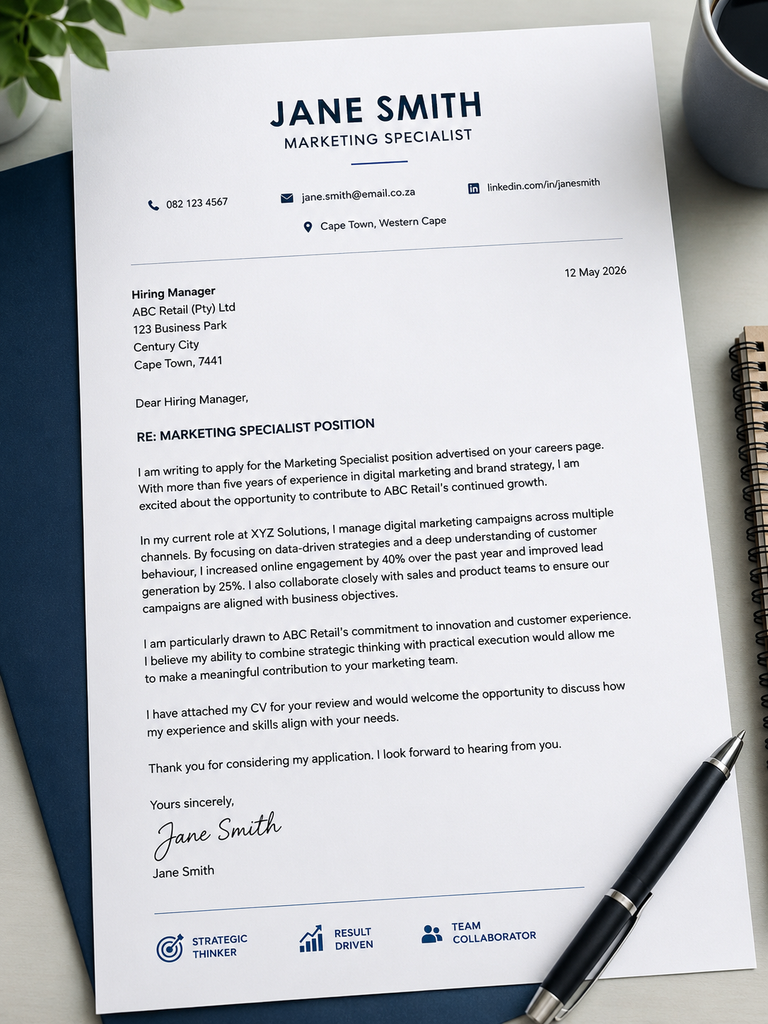
A great CV tells an employer what you’ve done. A good cover letter explains why you’re interested in the opportunity and why your experience could make you a strong candidate.
Yet many people when searching for a job either skip the cover letter completely or send the same generic letter with every application. That’s a missed opportunity.
When an employer asks for a cover letter, don’t treat it as a formality. Use it to connect your experience to the specific role, demonstrate your understanding of the opportunity and give the employer a reason to look more closely at your CV.
This guide explains how to write a cover letter that stands out, what to include, what to leave out, and how to tailor your letter for different jobs.
Table of Contents
Do You Really Need a Cover Letter?
Not every job application requires a cover letter.
If the employer specifically asks for a cover letter, you should provide one. If it isn’t requested, check the application instructions before deciding whether to include one.
A cover letter can be particularly useful when:
- You’re applying for a position where motivation and communication skills are important
- You’re changing careers
- You’re moving into a new industry
- Your previous experience doesn’t immediately appear relevant to the position
- You want to explain a particular aspect of your career history
- You have a specific reason for wanting to work for that organisation
The purpose isn’t to repeat your CV. It’s to add context and make a connection between your experience and the opportunity.
How to Write a Cover Letter: What to Include
A professional cover letter should be concise and focused.
A simple structure is:
- Your contact details
- The employer’s details
- The date
- A professional greeting
- An opening paragraph
- Your relevant experience and achievements
- Why you’re interested in the organisation and position
- A professional closing
You don’t need to write several pages. A strong cover letter should generally fit onto one page.
1. Start With Your Contact Details
Your cover letter should contain enough information for the employer to identify and contact you.
Include:
- Your full name
- Phone number
- Professional email address
- City and province
- LinkedIn profile, where relevant
You don’t normally need to include your full residential address.
2. Address the Hiring Manager
Whenever possible, find out who will be receiving applications for the position.
If the job advertisement names a contact person, use their name.
For example:
Dear Ms Jacobs,
If you can’t find a name, a professional alternative such as:
Dear Hiring Manager,
is perfectly acceptable.
Try to avoid outdated or overly impersonal openings such as “To Whom It May Concern” when you have a better option.
3. Write an Opening That Gets to the Point
The first paragraph of your cover letter should tell the employer:
- Which position you’re applying for
- Where you saw the vacancy, if relevant
- Why you’re interested
Avoid starting with a generic statement that could apply to any company.
Weak opening:
“I am writing to apply for the position advertised at your company. I believe I would be a valuable asset to your organisation.”
There’s nothing particularly wrong with it, but it doesn’t give the employer a reason to keep reading.
Stronger opening:
“I am applying for the Marketing Specialist position advertised on your website. With more than five years of experience developing digital campaigns and managing online customer engagement, I was particularly interested in the opportunity to contribute to your company’s growing digital marketing team.”
The second example immediately establishes the role, the candidate’s relevant experience and their reason for applying.
4. Show What You Can Bring to the Role
This is where your cover letter should move beyond your CV.
Choose one or two relevant achievements or experiences and explain how they demonstrate your suitability for the position.
For example:
“In my current role, I manage digital campaigns across multiple channels and have increased online engagement by 40% over the past year. I also work closely with sales and product teams to develop campaigns aligned with customer and business objectives.”
Notice that this doesn’t simply say:
“I have excellent marketing skills.”
It provides evidence.
Use achievements wherever possible
Consider mentioning:
- Revenue generated
- Costs reduced
- Efficiency improvements
- Sales targets achieved
- Projects completed
- Teams managed
- Customers gained
- Processes improved
- Problems solved
If you can demonstrate an achievement with a number, percentage or measurable result, it can make your example much stronger.
5. Connect Your Experience to the Job
One of the biggest mistakes candidates make is writing a cover letter entirely about themselves.
The employer also wants to know:
What can you bring to us?
Read the job advertisement carefully and identify the main problems, responsibilities and requirements associated with the role.
Then connect your experience to them.
For example:
“Your vacancy highlights the need for someone who can manage multiple client accounts while maintaining strong relationships. In my current position, I manage a portfolio of 25 clients and have maintained a 95% client retention rate over the past two years.”
This is much stronger than simply saying:
“I have excellent communication and customer service skills.”
You’re showing the employer how your experience relates to what they need.
6. Explain Why You Want the Job
Employers can usually tell when a cover letter has been copied and pasted.
A strong cover letter should include a genuine reason you’re interested in the particular opportunity.
That might be:
- The company’s industry
- Its products or services
- An opportunity to use a particular skill
- The responsibilities of the position
- An opportunity to move into a new area
- The organisation’s growth
- A connection between your experience and the company’s goals
You don’t need to write a paragraph of praise about the company.
Instead, demonstrate that you’ve actually considered why this particular position interests you.
7. If You’re Changing Careers, Explain the Connection
A cover letter can be particularly valuable when your career history doesn’t immediately match the job you’re applying for.
Instead of apologising for your lack of direct experience, focus on the transferable skills and relevant experience you bring with you.
For example:
“After eight years managing customer-facing operations, I am now looking to move into project coordination. My current role has given me extensive experience managing deadlines, coordinating teams, resolving problems and communicating with multiple stakeholders, all of which are directly relevant to the Project Coordinator position.”
Your CV shows the career history.
Your cover letter can explain why that career history makes sense for the next step you’re trying to take.
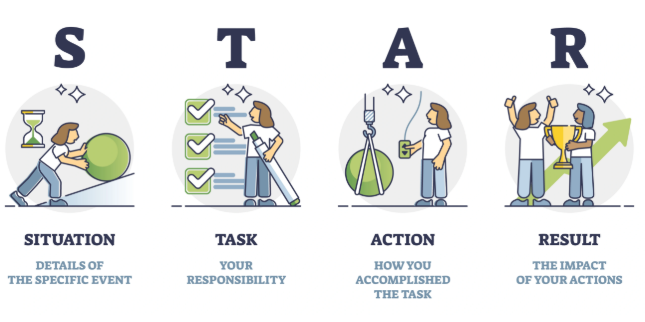
8. Use the STAR Method for Stronger Examples
If you’re struggling to decide what achievements to include, the STAR method can help.
Situation: What was happening?
Task: What needed to be achieved?
Action: What did you do?
Result: What happened?
You don’t need to write your cover letter using four separate headings. Instead, use the method to identify a strong example and then explain it concisely.
Example:
“When customer response times increased during a period of rapid growth, I reviewed our existing enquiry process and introduced a new allocation system. This reduced average response times by 30% and helped the team manage the increased workload without adding additional staff.”
That’s far more convincing than simply claiming:
“I am an excellent problem solver.”
9. End With a Strong Closing
Your final paragraph should be professional and confident.
Thank the employer for considering your application and indicate that you’d welcome the opportunity to discuss the position.
For example:
“I would welcome the opportunity to discuss how my experience in digital marketing and campaign management could contribute to your team. Thank you for considering my application, and I look forward to hearing from you.”
Keep the ending simple. You don’t need to repeat your entire career history or make exaggerated claims about being the “perfect candidate.”
Cover Letter Example
Here’s an example of how the different elements can come together:
Jane Smith
Johannesburg, Gauteng
082 000 0000 | jane.smith@email.com
28 August 2026
Hiring Manager
ABC Marketing
Johannesburg, Gauteng
Dear Hiring Manager,
I am applying for the Marketing Specialist position advertised on your website. With more than five years of experience in digital marketing and campaign management, I was particularly interested in the opportunity to contribute to ABC Marketing’s growing digital presence.
In my current position, I manage digital campaigns across multiple channels and have increased online engagement by 40% over the past year. I also work closely with sales and product teams to develop campaigns aligned with customer needs and business objectives. This experience has strengthened my ability to manage multiple projects while using performance data to identify opportunities for improvement.
I was particularly interested in this position because of ABC Marketing’s focus on developing digital strategies for growing businesses. My experience combining campaign planning, content development and performance analysis would allow me to contribute to this area while continuing to develop my skills within a growing marketing team.
I would welcome the opportunity to discuss how my experience could contribute to your organisation. Thank you for considering my application, and I look forward to hearing from you.
Kind regards,
Jane Smith
Common Cover Letter Mistakes to Avoid
Even a strong CV can be undermined by a poorly written cover letter.
Avoid:
Sending the same letter to every employer
A generic cover letter suggests you haven’t taken the time to understand the role.
Repeating your CV word for word
Your cover letter should add context rather than simply turn your CV into paragraphs.
Making it all about what you want
Explain why the opportunity interests you, but also show what you can contribute to the employer.
Writing too much
Your cover letter should be concise. If the employer has to work through three pages to find your main point, you’ve probably written too much.
Using generic claims
Statements such as “I’m hardworking,” “I’m passionate” and “I’m a team player” are easy to write but don’t prove anything.
Where possible, provide an example that demonstrates the quality you’re claiming.
Forgetting to change the company name
If you’re using a previous cover letter as a starting point, check every detail before sending it.
Sending a letter addressed to the wrong company is an avoidable mistake.
Using an unprofessional email address
Your email address should create a professional first impression.
Making spelling and grammar mistakes
Proofread your letter carefully before submitting it. Ideally, read it aloud or have someone else check it.
Should You Send Your Cover Letter as a PDF?
Follow the employer’s instructions first.
If no specific format is requested, a PDF can be useful because it generally preserves your formatting when the document is opened on another device.
Use a clear filename such as:
Jane-Smith-Cover-Letter.pdf
rather than something like:
CoverLetterFinal2.pdf
How to Tailor Your Cover Letter
Before sending your application, spend a few minutes comparing your cover letter with the vacancy.
Ask yourself:
- Have I named the correct position?
- Have I used relevant terminology from the job advertisement?
- Have I explained why I’m interested in this particular role?
- Have I highlighted experience that matches the employer’s requirements?
- Have I included at least one specific achievement or example?
- Have I used the correct company name?
- Have I checked the spelling of the recipient’s name?
- Have I proofread the entire letter?
If you can answer yes to these questions, your cover letter is far more likely to feel like a genuine application rather than a generic template.
FAQs: How to Write a Cover Letter
Is a cover letter still necessary in 2026?
Not every employer requires one, but you should provide one when the vacancy specifically requests it. A well-written cover letter can also be useful when you need to explain your motivation, highlight relevant experience or make a career transition clearer.
How long should a cover letter be?
For most applications, one page is sufficient. Focus on your most relevant experience and keep the letter concise.
Should I use the same cover letter for every job?
It’s better to tailor your cover letter for each position. At a minimum, change the job title, company information and examples you use so they relate directly to the vacancy.
What should I say if I don’t know the hiring manager’s name?
Use a professional greeting such as “Dear Hiring Manager” rather than guessing the person’s name.
Can I use AI to help write my cover letter?
AI tools can help you brainstorm, organise your thoughts or improve wording, but your final cover letter should accurately reflect your own experience and sound like you. Always check the content carefully before submitting it.
Should a cover letter repeat my CV?
No. Your cover letter should complement your CV rather than repeat it. Use it to explain your motivation, highlight particularly relevant achievements and connect your experience to the employer’s needs.
The Bottom Line
A cover letter doesn’t need to be complicated.
The strongest letters are usually specific, relevant and concise. They tell the employer why you’re applying, highlight evidence of what you can contribute and demonstrate that you’ve taken the time to understand the position.
Think of your CV as the evidence of your career.
Your cover letter is the conversation that connects that evidence to the opportunity.
Take the time to tailor it, give the employer a reason to keep reading, and always proofread it before you press Send.
Other Helpful Resources
Learn more about How to Build a Strong CV to stand out in the crowd and shows employers why you’re a strong candidate for the role.
If you’d prefer more some help with formatting, creating your CV, and step-by-step guidance on how to write a cover letter, explore our recommended Online CV Builder Tools with professionally designed templates.
Some professions require a portfolio showcasing your work, if this is you then visit our guide on How to Create a Professional Online Portfolio.
Affiliate Disclosure
Some of our articles may include links to products, services, or resources that we believe could be helpful to job seekers and employers, some of which are affiliate links, which means we may earn a small commission if you make a purchase, at no extra cost to you. These small commissions help support our editorial team, so we can continue reviewing, testing, and sharing the most useful and effective tools and resources for job seekers.